







A good aviation website does more than look polished. It helps a visitor understand the operator, school, broker, MRO, airport or aviation service quickly, verify important information, find the right next step and complete an enquiry without unnecessary friction.
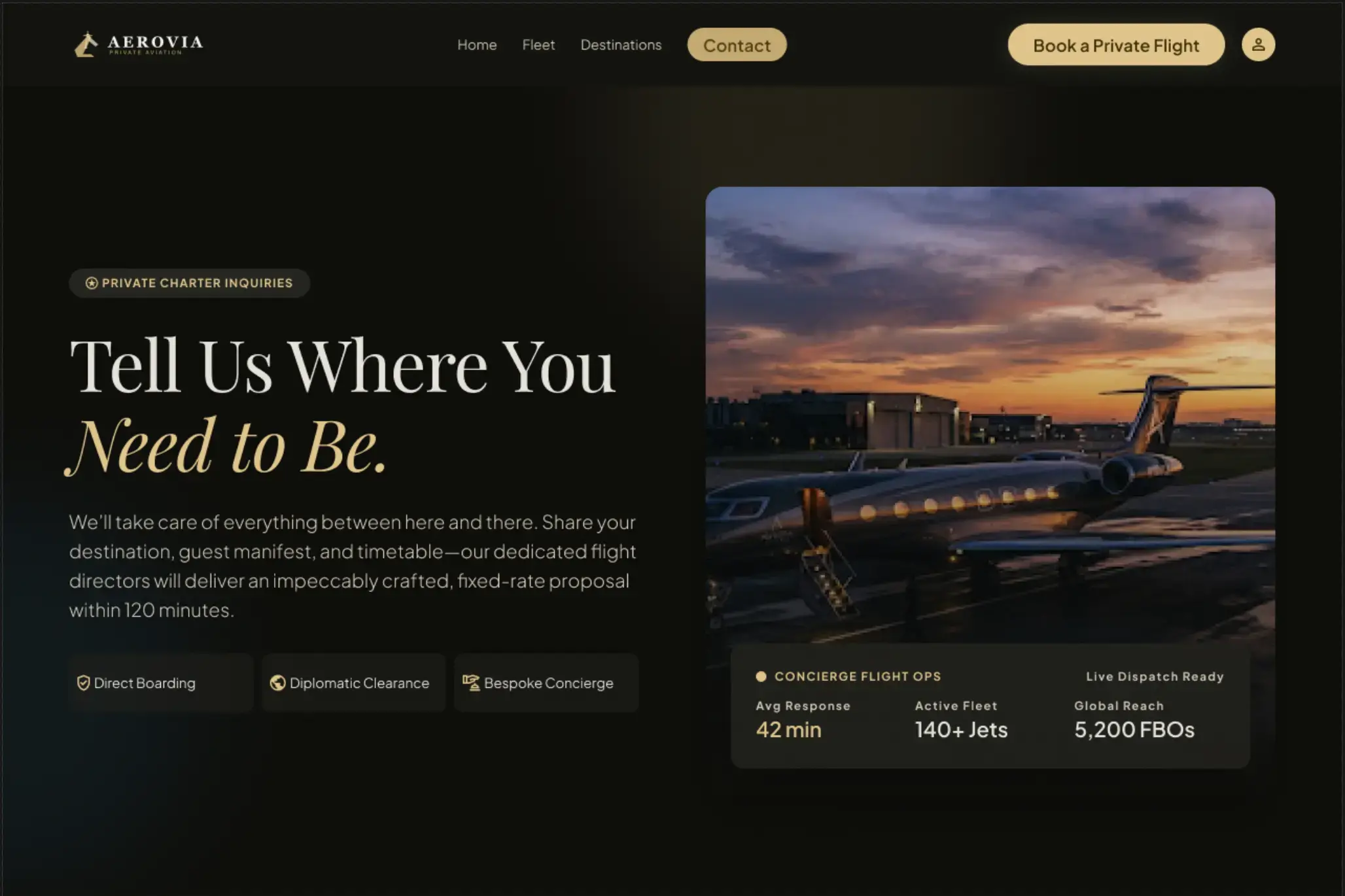
For aviation businesses, quality is especially visible in the details. Fleet information, training programs, maintenance capabilities, aircraft listings, routes, certifications, facilities and contact paths must be presented accurately and in a structure that reflects how real prospects make decisions.
What makes the best aviation website design genuinely effective?
The best aviation website design is not defined by a particular visual style. It is defined by how well the site reduces uncertainty for the right audience while making the company's capabilities easy to verify and act on.
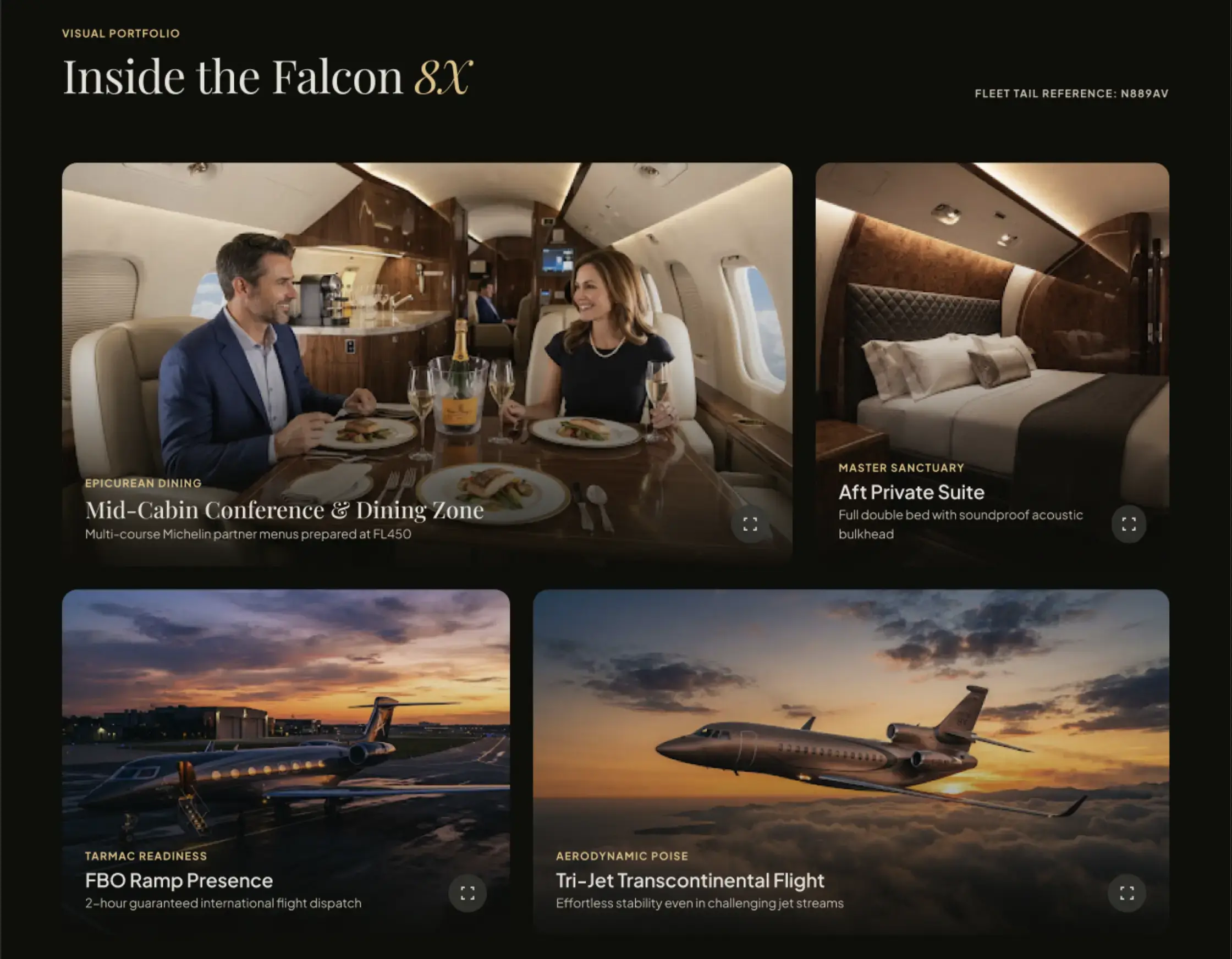
A private charter client may want to evaluate aircraft, cabin details, destinations and the quote process. A prospective student pilot may compare courses, aircraft, instructors and entry requirements. An airline procurement team may need maintenance capabilities, aircraft types, locations and an RFQ path. The website should make those different journeys obvious instead of forcing every visitor through the same generic pages.
Aviation website quality is best judged by how quickly a qualified visitor can understand what the business does, verify that it is relevant and take the correct next step.
15 aviation website features to evaluate
| Feature | What a visitor should be able to understand | Why it matters |
|---|---|---|
| 1. Clear positioning | What the company does and for whom | Reduces confusion immediately |
| 2. Accurate aviation visuals | What aircraft, facilities or services are actually relevant | Supports credibility |
| 3. Verifiable trust signals | Capabilities, approvals, experience or operating facts | Helps visitors assess fit |
| 4. Real company identity | Who is behind the business and how to contact it | Reduces perceived risk |
| 5. Audience-led navigation | Where each visitor type should go | Shortens the path to useful information |
| 6. Dedicated service pages | Details about each service, fleet, program or capability | Improves decision support |
| 7. Useful comparison information | Differences between options | Helps prospects self-qualify |
| 8. Contextual calls to action | The correct next step for the current page | Improves enquiry relevance |
| 9. Fit-for-purpose forms | What information is needed for a meaningful response | Improves lead quality |
| 10. Strong mobile UX | How to browse and enquire on a phone | Prevents friction on small screens |
| 11. Fast, stable performance | Pages load and remain usable without distraction | Supports usability and trust |
| 12. Accessible, readable content | Information can be understood and operated easily | Broadens usability |
| 13. Maintainable CMS structure | Content can stay accurate as the business changes | Prevents stale pages |
| 14. Search-led architecture | Each important topic has a clear page and purpose | Supports organic discovery |
| 15. Analytics and conversion tracking | Which pages and actions produce meaningful enquiries | Supports better decisions |
Trust should be built with evidence, not decorative design
1. Clear positioning above the fold
The first screen should explain the business in operational terms. A visitor should not need to decode a slogan to learn whether the company is an airline, charter operator, flight school, MRO, aircraft broker, airport service provider or another aviation business.
Good positioning normally combines a precise value proposition, a relevant aviation visual and one primary action. The page can still feel premium, but clarity should come before animation, video effects or broad statements such as “excellence in aviation.”
2. Accurate aviation-specific visuals
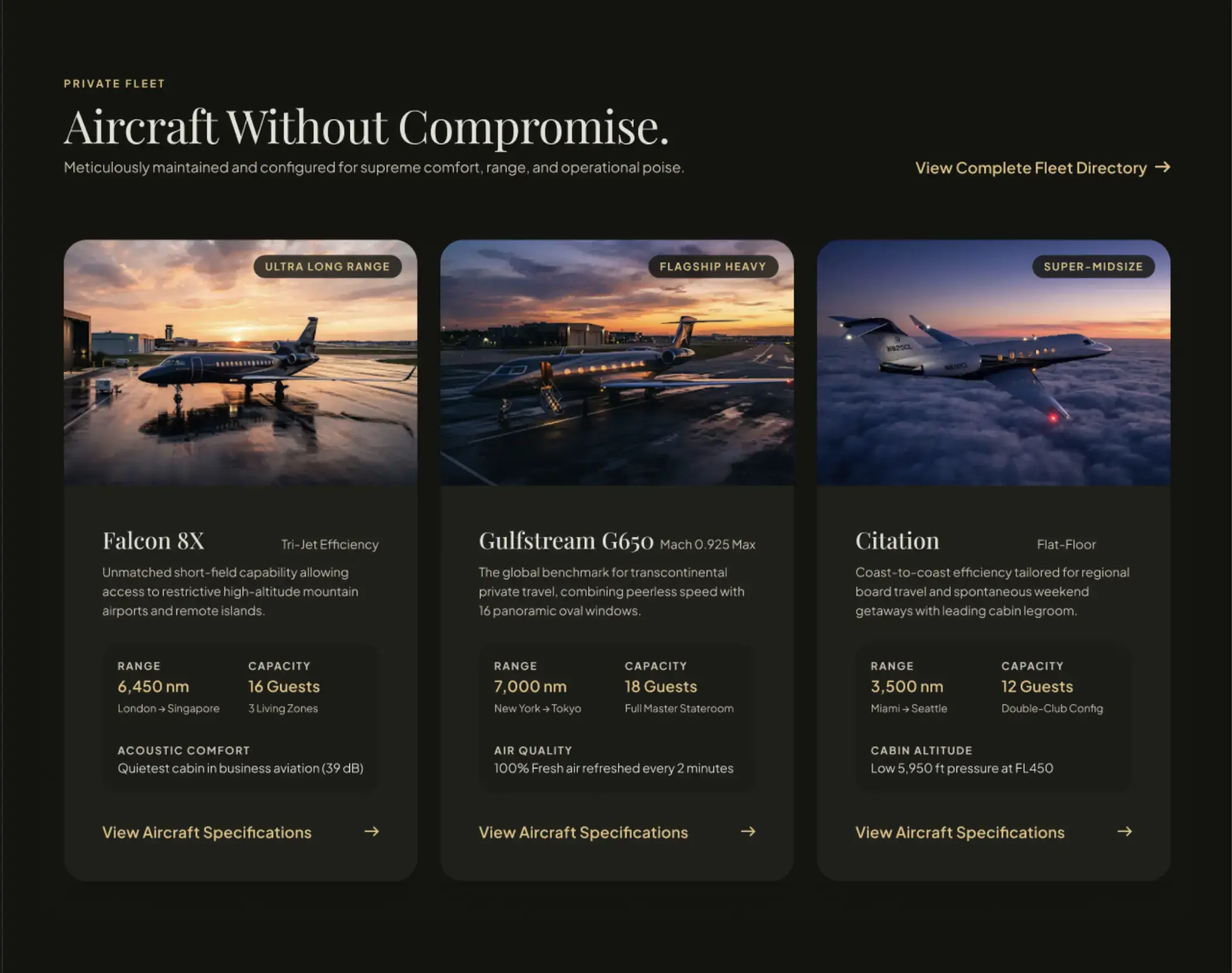
Images should reinforce what the company actually offers. If an operator flies a specific fleet, the website should not create confusion with unrelated aircraft. If an MRO specializes in particular aircraft categories or components, imagery should support that technical context. If a flight school sells training, real aircraft, classrooms, instructors and facilities usually communicate more than generic lifestyle photography.
3. Verifiable operational trust signals
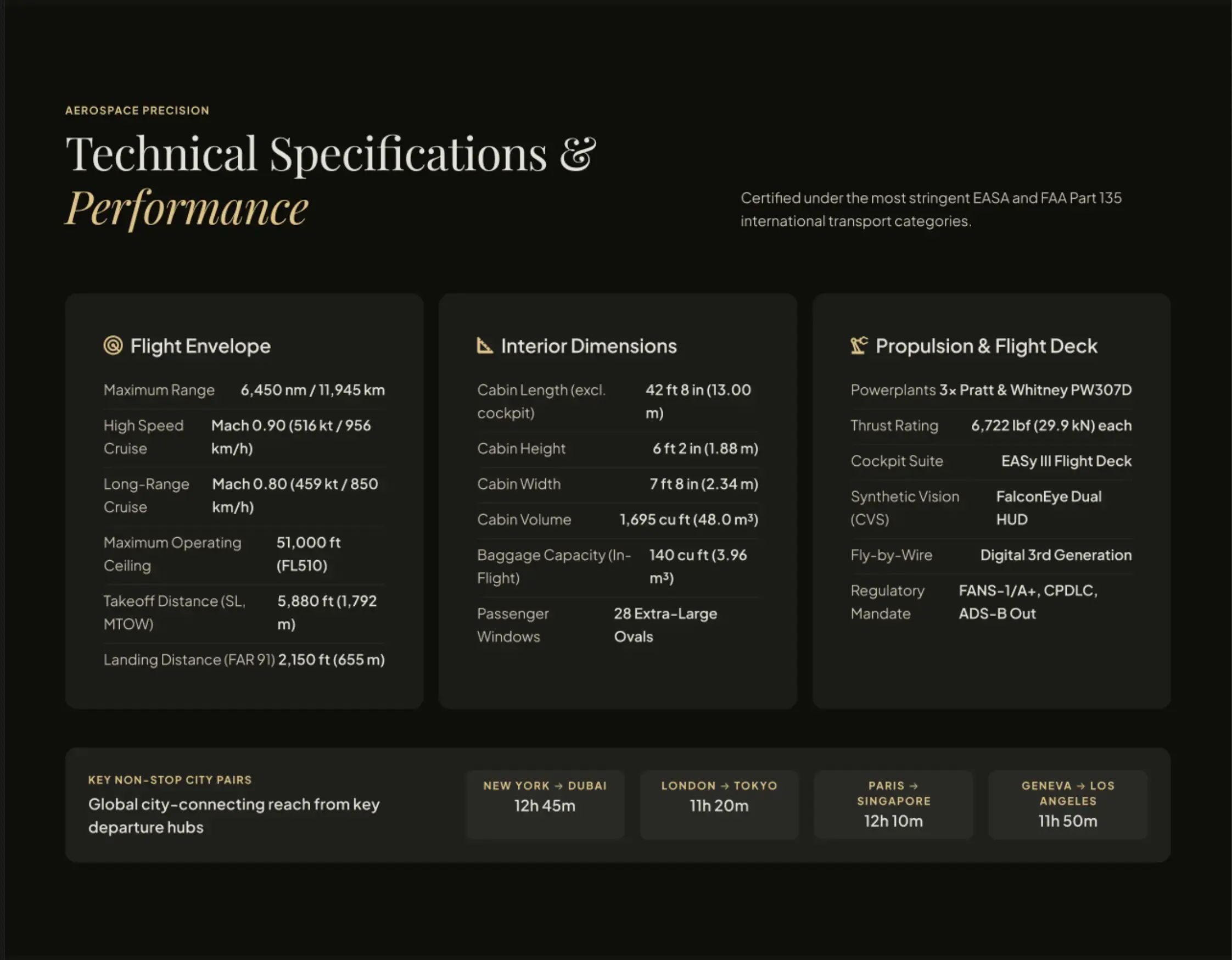
Trust signals should be factual and relevant to the business model. Examples may include aircraft types, maintenance capabilities, locations, operating history, recognized approvals, training programs, facilities, partnerships or other information a prospect can evaluate. Any regulated or certification-related claim should be stated accurately and kept current.
This is one reason specialist Aviation Website Design should begin with information architecture and evidence, not only visual styling. The website needs places for the facts that real aviation buyers use to judge suitability.
4. Real company identity and contact information
Aviation decisions often involve higher value, operational dependency or longer sales cycles. The website should therefore make the organization easy to identify. Useful elements can include a company overview, leadership or team information where appropriate, office or base locations, direct contact routes and clear legal or corporate details when relevant.
Information architecture should match the aviation buying journey
5. Navigation built around real audience needs
The main menu should reflect how customers think, not the company's internal organization chart. An airline website may separate passenger, cargo, charter or ACMI information. A flight school may organize around licenses, ratings, discovery flights, fleet and admissions. An MRO may lead with capabilities, aircraft types, locations and RFQ information.
If multiple audiences use the same site, the navigation should help them separate themselves early. A prospective student, aircraft owner, procurement manager and job candidate should not all follow the same path.
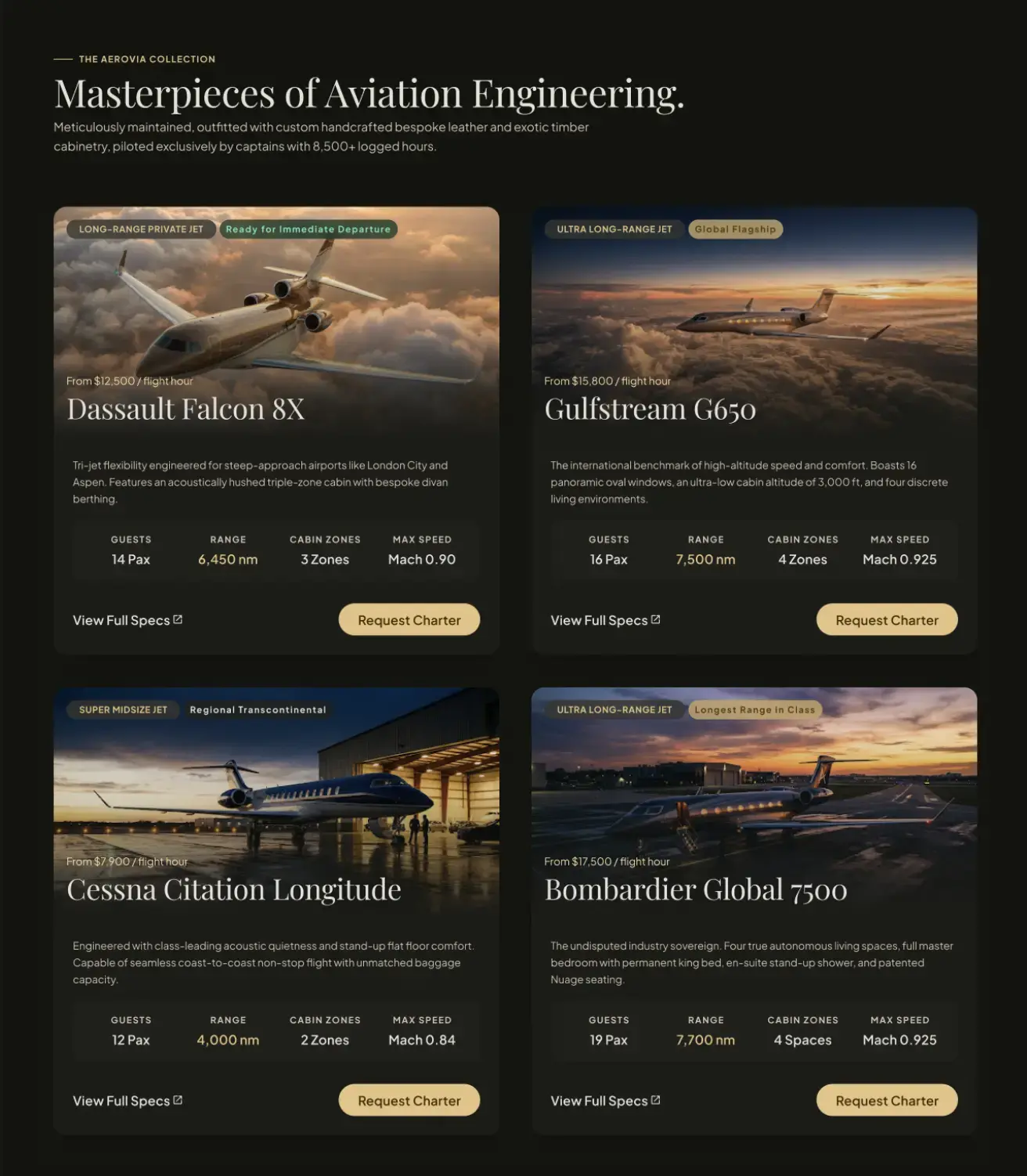
6. Dedicated pages for important services, fleets, programs and capabilities
One broad “Services” page is rarely enough for a complex aviation business. Important offers deserve their own pages when they have distinct questions, specifications, search demand or conversion paths.
- Airlines may need fleet, route, destination, cargo, charter or ACMI pages.
- Flight schools may need separate pages for licenses, ratings, hour building, aircraft and admissions.
- Charter operators may need aircraft, destination and charter enquiry pages.
- Aircraft brokers may need structured aircraft listing pages with specifications and enquiry options.
- MRO companies may need capability pages organized by aircraft type, service category, component or facility.
These page types also give aviation web development a clear functional brief: the CMS should support repeatable aviation content structures instead of treating every page as an unstructured text block.
7. Decision-support content instead of marketing filler
Strong aviation websites answer the questions that delay an enquiry. That may include aircraft capacity, cabin configuration, program duration, entry requirements, supported aircraft, service scope, facilities, lead-time expectations, locations, documentation requirements or how the enquiry process works.
The objective is not to publish every operational detail publicly. It is to provide enough specific information for a qualified visitor to determine whether the business is relevant before making contact.
Conversion paths should reflect the type of aviation enquiry
8. Contextual calls to action
Calls to action should match page intent. “Contact us” can be useful, but it is often too generic as the only option. A charter page may use “Request a charter quote.” A maintenance capability page may use “Send an RFQ.” A flight training page may use “Ask about this course” or “Book a discovery flight.” An aircraft listing may use “Request aircraft details.”
Specific calls to action reassure users that they are entering the correct workflow and help the receiving team understand the lead context.
9. Fit-for-purpose enquiry forms
A form should collect enough information to make the next response useful, but not so much that it becomes a barrier. Different aviation enquiries need different fields. A charter request may need routing, dates and passenger count. An MRO RFQ may need aircraft type and service requirement. A training enquiry may need the course of interest and current experience level.
When one generic form is used for every service, the visitor does more work explaining the context and the business receives less structured lead data.
10. Mobile-first enquiry experience
Mobile quality is not just a responsive layout. Menus, tables, fleet specifications, forms, phone links, messaging buttons and sticky interface elements all need to remain usable on a smaller screen. Large aircraft imagery should not push essential information too far down the page, and complex forms should be broken into a manageable flow.
Technical quality is part of aviation website credibility
11. Fast and visually stable pages
High-resolution aviation photography and video can make a site impressive, but poorly handled media can also make it slow. Images should be appropriately sized and compressed, video should be used deliberately, and the layout should avoid distracting shifts while content loads.
Performance work should focus on real page templates that matter to prospects, not only the homepage. Fleet pages, destination pages, aircraft listings and long technical service pages often carry more media and structured content than a simple corporate landing page.
12. Accessible and readable content
Clear contrast, legible type, descriptive links, meaningful image alternative text, usable keyboard navigation and well-labelled forms improve the experience for a wider range of visitors. They also force better content discipline: headings become clearer, interfaces become easier to understand and critical information is less dependent on visual decoration alone.
13. A CMS that keeps aviation information current
A website can look excellent at launch and become unreliable if routine changes are difficult. Aircraft can be added or removed, training programs change, new capabilities are introduced, team details evolve and content may need localization for different markets.
The CMS should make recurring aviation entities manageable. Structured fields for aircraft, specifications, courses, locations, capabilities or listings reduce inconsistency and make updates safer. This is especially important when the website grows into multiple languages.
Search visibility should be designed into the website architecture
14. Search-led page structure and metadata
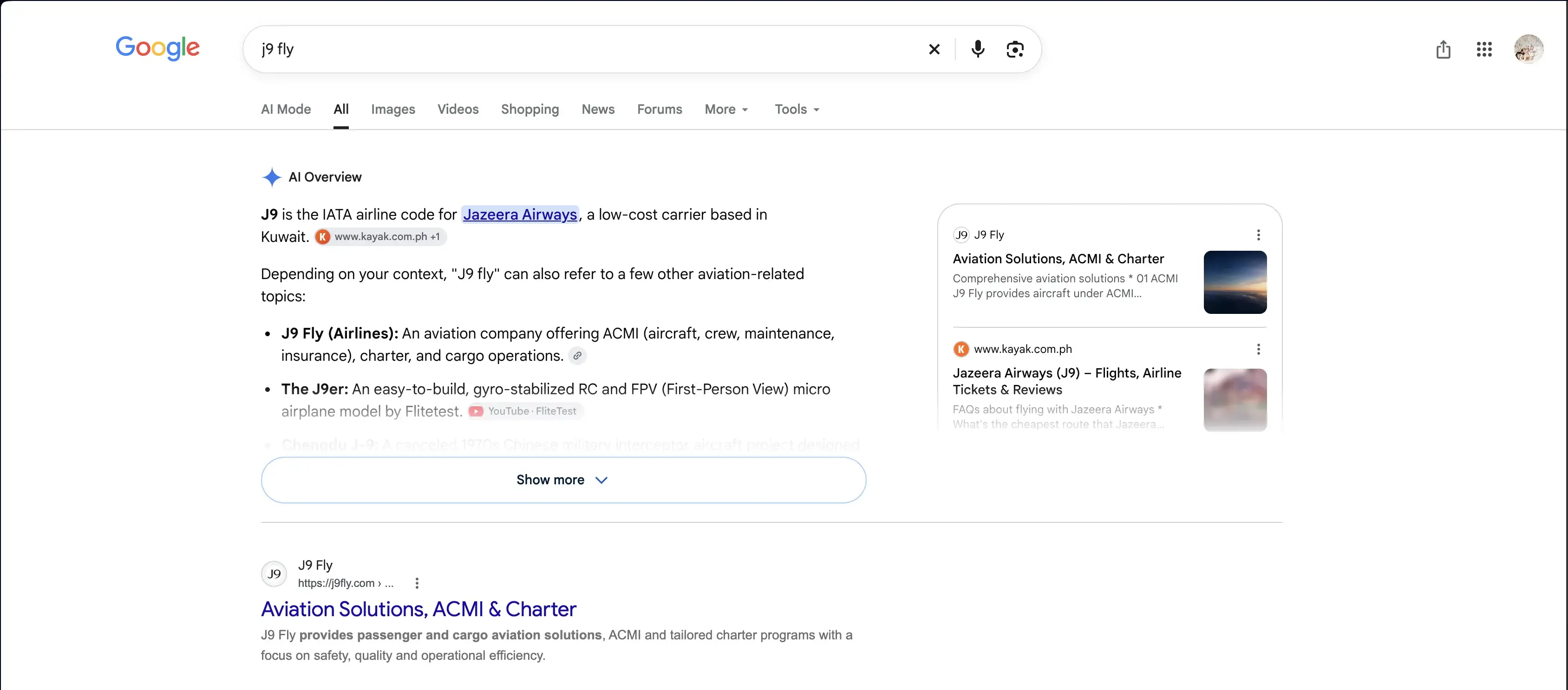
Good aviation SEO starts before writing meta titles. Each important topic should have a clear page owner, a defined search intent and enough original information to deserve its place in the site architecture.
A homepage should not try to rank for every aircraft, route, training course, capability and service. Dedicated pages create clearer topical relationships and allow internal links to connect broad commercial pages with more specific supporting content. A well-planned aviation SEO structure also reduces the risk of several pages competing for the same intent.
Page titles, headings, internal links, image descriptions and structured content should then reinforce what each page is actually about. Search optimization should clarify the site, not make the copy repetitive.
15. Analytics and conversion tracking
Aviation website performance should be measured by meaningful actions, not page views alone. Depending on the business, useful events may include quote requests, RFQs, course enquiries, aircraft listing leads, calls, messaging clicks, brochure downloads or form starts.
Tracking should distinguish the action and, where practical, the page or service that produced it. That creates a feedback loop: the business can see which content attracts qualified interest, which pages lose users and where the enquiry process needs improvement.
How to evaluate an aviation website before redesigning it
A practical review should combine business, content, UX and technical questions. Start with representative user journeys rather than a visual preference exercise.
- Choose the main audiences. Identify the visitors that matter most to revenue, operations or growth.
- Test the first 30 seconds. Can each audience understand what the company offers and where to go next?
- Review evidence. Check whether fleet, capabilities, programs, facilities, approvals, people and operating facts are specific and current where relevant.
- Trace the conversion path. Move from a service page to the enquiry form on both desktop and mobile.
- Check content ownership. Confirm that major services and topics have dedicated pages rather than competing generic pages.
- Review maintainability. Ask how easily staff can update recurring information without breaking design consistency.
- Check measurement. Confirm that meaningful enquiries can be attributed to the pages and channels that generated them.
If the review reveals structural issues, redesign scope should be based on those problems rather than a visual refresh alone. Comparing requirements against aviation website pricing is more useful when the required page types, integrations, languages, CMS features and migration work are already defined.
Common signs an aviation website needs improvement
- The homepage uses broad claims but does not explain the actual aviation service clearly.
- Fleet, course, capability or aircraft information is buried inside PDFs or long generic pages.
- Visitors cannot tell which enquiry path fits their need.
- The mobile menu or forms are difficult to use.
- Important operational information is outdated or inconsistent across pages.
- Most pages use the same generic copy and target the same broad keyword.
- The CMS makes routine aircraft, program, capability or language updates difficult.
- Analytics records traffic but not the actions that represent real business value.
Any one of these issues can weaken the user journey. Several together usually indicate that the problem is architectural, not cosmetic.
Frequently asked questions
Practical questions for aviation businesses evaluating an existing website or planning a redesign.
01 Does a good aviation website need custom design? +
02 What should be shown on an aviation website homepage? +
03 How much fleet information should an aviation website publish? +
04 Should every aviation service have its own page? +
05 How often should an aviation website be reviewed? +
Final thoughts
The best aviation website is not the one with the most animation, the largest aircraft photograph or the longest list of features. It is the one that gives the right visitor the right evidence, information and action with the least unnecessary friction.
For an aviation business, that means combining trustworthy operational content, audience-led architecture, specific enquiry journeys, strong mobile and technical execution, maintainable content systems and measurable outcomes. Those foundations make design useful long after launch.
Need help with your aviation website?
Turn your website into a clearer, faster and more visible digital system built around your aviation business goals.