







Private aviation website trust signals are the pieces of evidence that help a prospective client determine whether a company is credible before making contact. They include clear company identity, an understandable operating model, accurate aircraft information, verifiable credentials, real people, current contact details, privacy information and a technically reliable website.
For private and business aviation companies, this matters because premium photography alone cannot answer the questions behind a high-value decision. A polished website may create a strong first impression, but trust grows when visitors can verify who they are dealing with, what the company actually provides and whether the information appears current and consistent.
What are private aviation website trust signals?
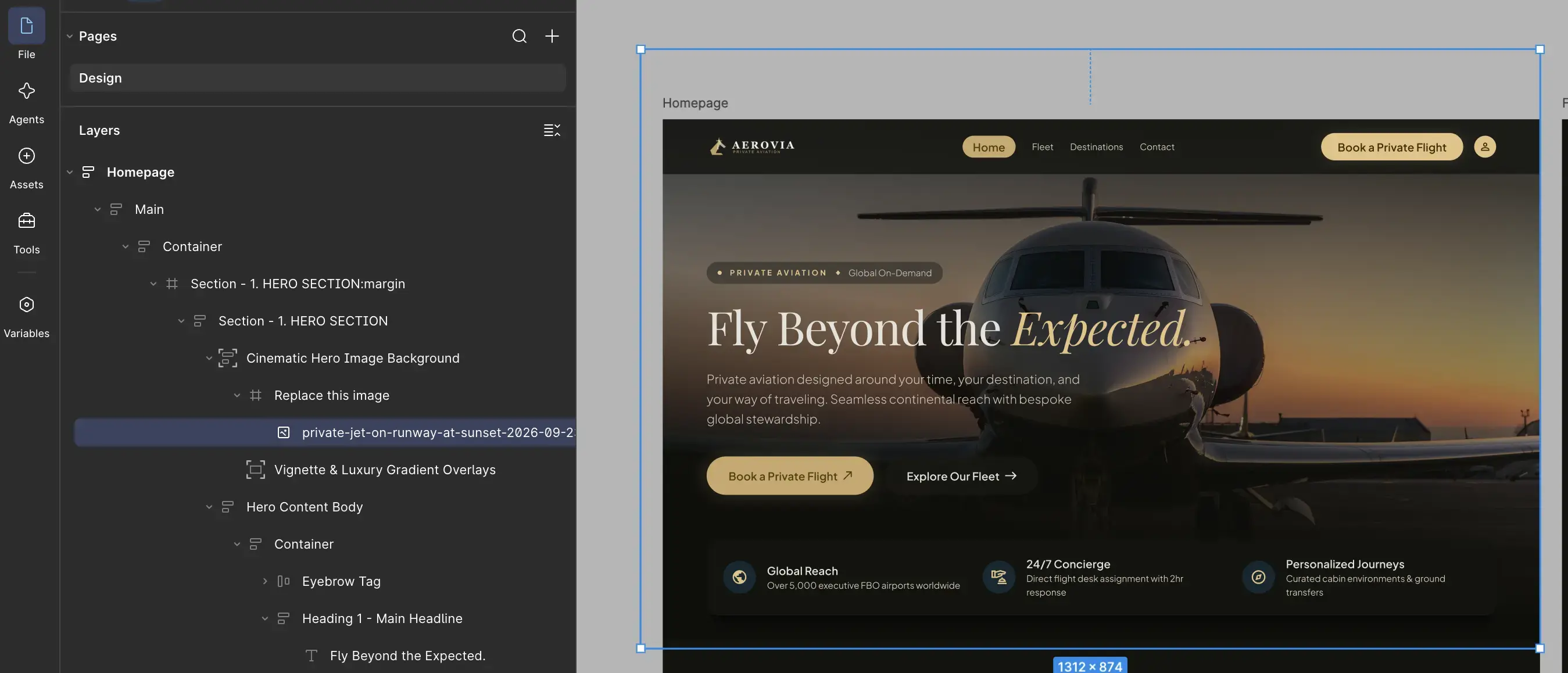
Trust signals are observable details that allow a visitor to evaluate a business without relying entirely on its own marketing claims. The strongest signals answer questions that a serious prospective client is likely to ask before committing time, money or personal information.
For a private aviation website, those questions may include:
- Who is the company behind this website?
- Is it an operator, broker, aircraft manager, sales company or another type of aviation business?
- Which aircraft are genuinely relevant to the service?
- Which claims, approvals or credentials can be verified?
- Who will respond when I make contact?
- Is the information current?
- How will my contact and travel information be handled?
A trust signal therefore needs more than visual prominence. It needs meaning. A badge with no explanation, an aircraft image with no context or a testimonial with no identifiable source may occupy space without reducing much uncertainty.
In private aviation, credibility comes from making important facts easy to understand and easy to verify.
Which private aviation website trust signals matter most?
| Trust signal | What it helps a client verify |
|---|---|
| Clear company identity | Who is providing the service and how the business can be contacted |
| Operating model | Whether the company operates aircraft, brokers flights, manages aircraft or provides another service |
| Specific service information | What the company actually does and for which type of client |
| Accurate fleet or aircraft access | Which aircraft are owned, operated, managed, listed or sourced through partners |
| Relevant credentials | Which approvals, certificates, ratings or memberships genuinely apply |
| Real people | Who leads, sells or supports the service |
| Authentic imagery | Whether the website reflects the real company, aircraft and facilities |
| Current business information | Whether the website is actively maintained |
| Privacy and data handling | How contact or passenger information is treated |
| Professional technical execution | Whether the digital experience appears stable, secure and intentional |
Not every private aviation company needs all of these in the same form. An aircraft management company, charter broker, direct operator and aircraft sales business require different evidence. The principle is consistent: the website should help a qualified visitor understand the real business behind the brand.
This is why effective Private Aviation Website Design should begin with credibility architecture rather than simply choosing a luxury visual style. Design can emphasize trust signals, but it cannot replace missing evidence.
1. Make company identity and operating model unmistakable
A visitor should be able to determine who the company is and what role it performs without searching through legal pages or making an enquiry first.
This is particularly important in private aviation because several different business models can appear similar from the client's perspective. A company may directly operate aircraft, arrange flights as a broker, manage aircraft for owners, sell aircraft, provide FBO services or combine several activities.
Explain the role in plain language
The homepage and relevant service pages should explain the business model accurately. If the company sources aircraft through a network rather than operating every aircraft displayed, the website should not create the impression that every aircraft belongs to its own fleet.
Likewise, an operator should make its operational role understandable where that information is relevant to the service. Clear terminology reduces ambiguity before the sales conversation begins.
Provide consistent corporate information
Trust weakens when company names, addresses, phone numbers or service descriptions differ across the homepage, contact page, footer and legal documents.
Important information should be consistent across the website, including:
- company or trading name;
- physical office or operational location where appropriate;
- telephone and email contact;
- service regions;
- legal or corporate information required in the relevant jurisdiction;
- links to privacy and other applicable policies.
The objective is not to overload every page with legal text. It is to make the business identifiable.
2. Present credentials and operational claims with context
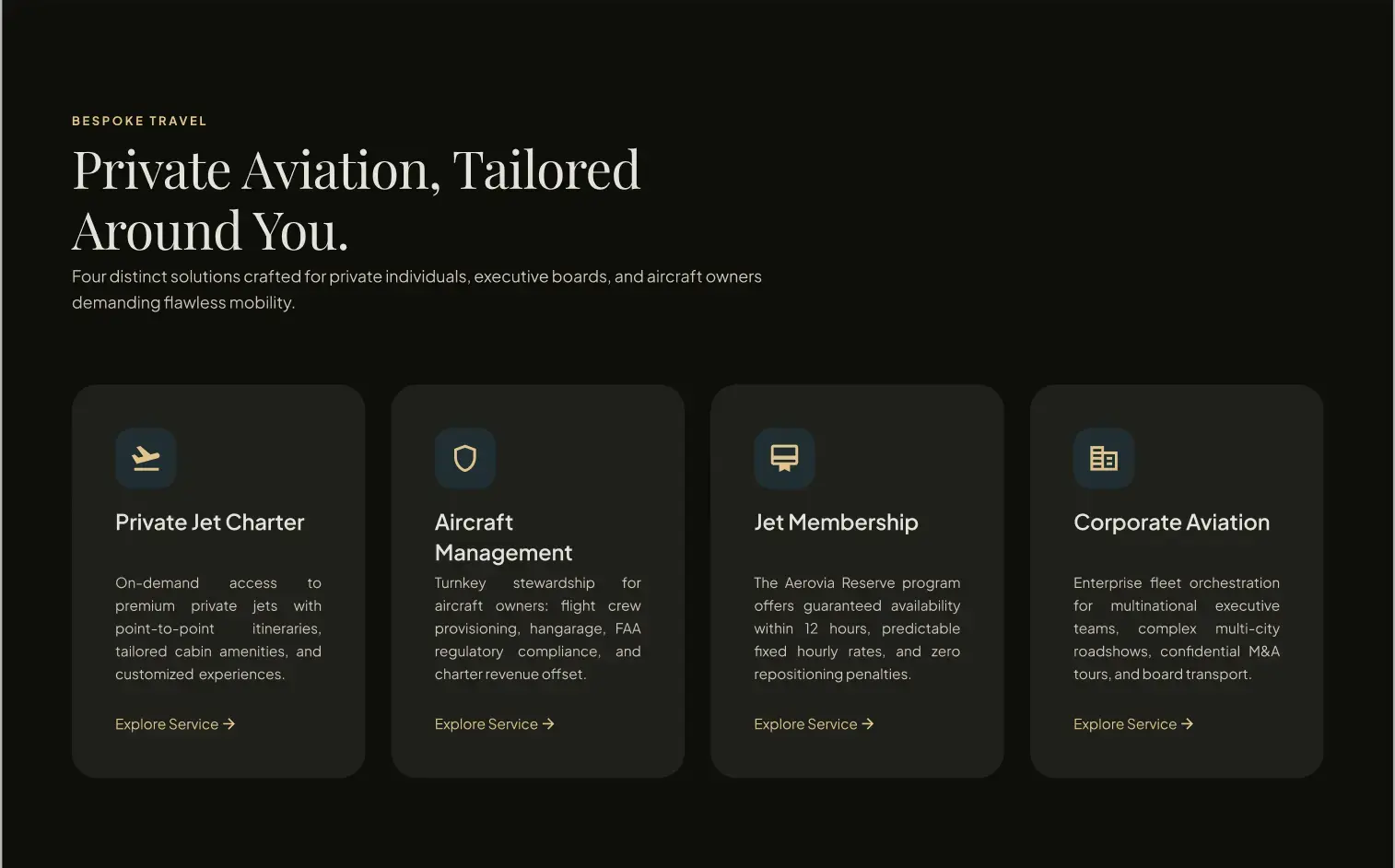
Credentials can be strong trust signals when visitors understand what they represent. They become weaker when the website displays a wall of logos without explaining whether each logo represents a certification, membership, partnership, rating, approval or software provider.
Where relevant, a private aviation company may publish information about:
- operating certificates or authorizations;
- safety audit ratings or accreditations;
- industry memberships;
- recognized quality or operational standards;
- aircraft management approvals;
- other jurisdiction-specific credentials.
Only claims that genuinely apply to the company should be shown, and their wording should reflect what the credential actually means. If a credential has an expiry, status or scope that can change, the website needs an ownership process for keeping it current.
Help visitors verify important claims
When an issuing organization or aviation authority provides a public verification resource, linking to an authoritative source can be more credible than expecting the visitor to accept a logo at face value.
Jurisdiction also matters. A certificate or operating status applicable in one country should not be presented as if it represents a universal international designation.
Avoid turning safety into generic marketing language
Safety-related information should be factual. Statements such as “highest safety standards” or “uncompromising safety” provide little decision value when they are not accompanied by specific evidence.
A better approach is to explain verifiable credentials, operational procedures or recognized programs that are genuinely relevant, while avoiding claims the website cannot substantiate.
3. Make fleet and aircraft information accurate
Aircraft imagery is central to many private jet websites, but the visual presentation should not create uncertainty about what the company actually provides.
Fleet information should distinguish between aircraft the company operates, manages, owns, lists for sale or can source through third parties when that distinction matters to the customer.
Give aircraft pages practical context
Useful information can include:
- aircraft manufacturer and model;
- cabin configuration;
- typical seating information;
- relevant baggage or cabin characteristics;
- range information when accurately sourced;
- actual interior and exterior photographs where available;
- the service for which the aircraft is relevant.
The objective is not to publish the maximum possible number of specifications. It is to give the client enough accurate context to understand the aircraft category and its relationship to the service.
Remove outdated aircraft promptly
An aircraft that left the fleet months ago but remains prominently displayed can create doubt about every other fact on the site. The same is true of outdated cabin photographs, old registrations, obsolete specifications or aircraft that are represented as available when their relationship with the company has changed.
Structured CMS data can help reduce this risk by keeping aircraft information in one authoritative record rather than manually copying it across multiple pages. This is an important consideration during aviation web development because trust depends partly on how easily operational content can be maintained after launch.
4. Show the people behind the private aviation brand
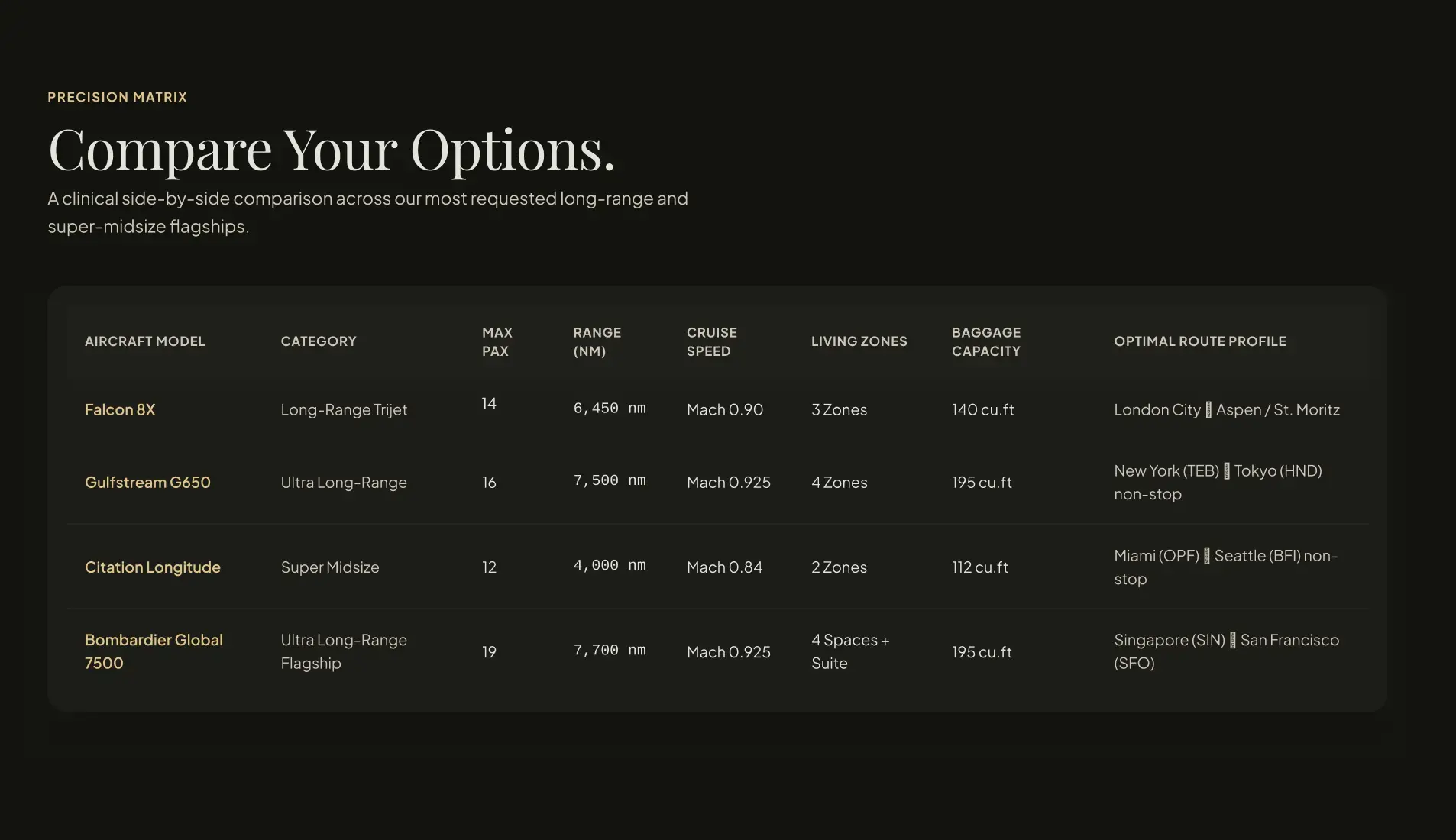
High-value aviation services are relationship-driven. A website that shows aircraft but no identifiable people can feel less accountable than one that explains who leads or represents the business.
Depending on the organization, useful people content may include:
- leadership;
- charter or sales specialists;
- aircraft management leadership;
- operations or customer-service contacts;
- relevant experience and professional background;
- languages spoken for an international client base.
Profiles should be concise and relevant rather than inflated biographies. The aim is to connect the digital brand to real people whom a customer may eventually speak with.
Use contact information that feels accountable
A generic form can be useful, but it should not be the only evidence that a business can be reached. A visible phone number, professional email structure, office information or named contact can all reduce uncertainty.
Contact information also needs maintenance. A premium website with outdated phone numbers or staff details creates a stronger negative signal than a simple website with accurate information.
5. Use authentic photography as evidence
Private aviation naturally lends itself to high-end photography, but imagery should communicate more than luxury. Real aircraft, interiors, facilities, crew and operations can provide evidence that the organization exists beyond the marketing layer.
Stock photography is not inherently unusable, especially during early-stage brand development. The risk begins when generic images imply a fleet, cabin, facility or service that the company does not actually control.
A practical image hierarchy is:
- Real company assets first. Aircraft, facilities, team and operating environment.
- Manufacturer-approved or partner imagery where appropriate. Clearly used in the correct context.
- Stock imagery only for broader editorial atmosphere. Avoid using it as evidence of a specific aircraft or capability.
Image captions and surrounding text can add context when the relationship is not obvious. The goal is accurate representation, not simply visual impact.
6. Treat privacy and discretion as part of website credibility
Private aviation clients may share contact details, travel plans, passenger information or other sensitive data during the enquiry process. The website should therefore demonstrate restraint about what it asks for and clarity about how information is handled.
Useful trust practices include:
- an accessible privacy policy;
- forms that request only information genuinely needed at that stage;
- secure transmission of website forms;
- clear explanation when information is passed to another service provider;
- appropriate consent and privacy controls for the jurisdictions being served;
- avoiding requests for highly sensitive documents through ordinary public forms when a more suitable secure workflow exists.
Privacy does not need to become a prominent marketing slogan unless it is central to the service. It should be visible in how the website behaves.
Trust before a charter enquiry is different from the enquiry UX itself
A client first needs confidence in the business; only then does the quote workflow need to make the request easy. For companies focused specifically on on-demand flying, the structure and conversion path should be handled as part of dedicated Air Charter Website Design rather than assuming that every private aviation visitor follows the same journey.
7. Technical quality creates supporting trust signals
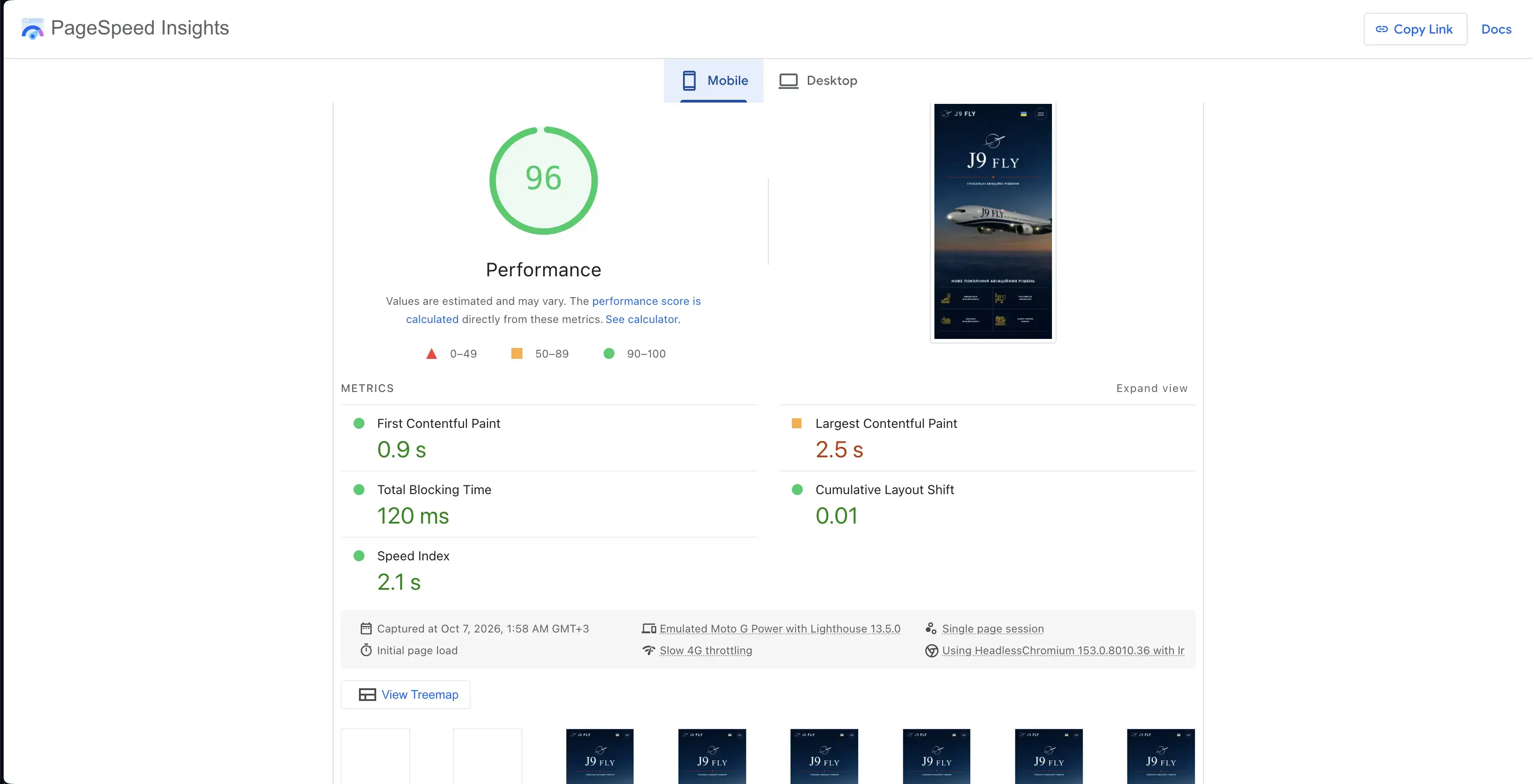
A technically polished website does not prove operational quality, but technical problems can create avoidable doubt. Broken pages, expired content, insecure forms, inconsistent mobile layouts or extremely slow media all suggest that the digital experience is not being managed carefully.
Important technical credibility signals include:
- HTTPS across the website;
- working forms and confirmation states;
- fast, stable page loading;
- responsive mobile layouts;
- readable aircraft specifications and tables;
- working links and downloads;
- accessible navigation;
- current copyright, contact and legal information where applicable.
These elements should support the business rather than become performance theatre. A perfect technical score does not compensate for vague service information or unverifiable claims.
Search visibility also depends on clear entities
Trust content can support search understanding when the website consistently identifies the company, services, aircraft and locations across relevant pages. Clear entity relationships, accurate internal links and descriptive page content help both people and search systems understand what the business represents.
This overlaps with aviation SEO, but trust should not be manufactured for search engines. The same factual clarity that helps a visitor understand the company also creates cleaner information architecture.
Where should trust signals appear on a private aviation website?
Trust evidence should appear where the corresponding question occurs. Placing every logo, testimonial and credential in one section of the homepage forces users to leave the context in which they need reassurance.
| Page | Useful trust signals |
|---|---|
| Homepage | Clear business model, main services, real imagery, core credentials and direct contact path |
| Service pages | Specific capabilities, process, relevant credentials, service contacts and realistic expectations |
| Fleet pages | Aircraft relationship, accurate specifications, current photography and configuration details |
| About page | Company history, leadership, operating locations and organizational context |
| Contact page | Real contact methods, locations, business identity and privacy context |
| Enquiry forms | Clear purpose, restrained data collection, privacy notice and confirmation of what happens next |
The homepage should establish initial credibility, but deeper pages should prove it. A visitor evaluating an aircraft should see aircraft-specific evidence. Someone considering aircraft management should see information relevant to management rather than generic charter testimonials.
This contextual approach also aligns with the broader features of a good aviation website: every page should help a qualified visitor understand the business and make the next decision with less uncertainty.
How to audit trust on a private aviation website
A useful trust audit can be completed without redesigning the website first. Review the site as if you had never heard of the company and were preparing to make a high-value enquiry.
- Identify the business. Can you tell exactly what the company does from the first screen and primary navigation?
- Check the operating model. Is the relationship between operator, broker, manager or aircraft provider understandable?
- Verify major claims. Can credentials and operational statements be confirmed where verification is possible?
- Review the fleet. Are aircraft, photographs and specifications current and accurately described?
- Look for accountable people. Can you identify who is behind the organization and how to reach it?
- Inspect privacy handling. Does the site ask for reasonable information and explain how data is handled?
- Test contact paths. Do forms, email links, phone numbers and mobile actions actually work?
- Check consistency. Compare company names, addresses, credentials and service claims across pages.
- Look for stale information. Outdated team members, aircraft, news, certificates or broken downloads can undermine otherwise strong credibility.
- Review mobile presentation. Important trust information should remain visible and usable on a phone.
Common private aviation website credibility mistakes
- Using luxury language instead of evidence. The site repeatedly claims exclusivity, excellence or safety without explaining anything verifiable.
- Making the operator-broker relationship unclear. Visitors cannot determine who will actually provide the aviation service.
- Displaying unexplained credential logos. Badges appear without context about what they mean or whether they apply to the company.
- Showing aircraft the business does not clearly identify its relationship with. A visitor may reasonably assume a stock aircraft image represents the company's fleet.
- Using outdated fleet or team information. Old content casts doubt on current content.
- Hiding the people behind the business. The website feels like an anonymous lead-generation layer.
- Collecting too much information too early. A first enquiry requests sensitive details before the visitor understands why they are needed.
- Relying entirely on testimonials. Social proof cannot replace business identity, operational evidence or accurate service information.
- Prioritizing animation over clarity. Visual effects make the site feel expensive but slow down access to important facts.
- Keeping every trust signal on the homepage. Service and fleet pages lack the evidence needed at the moment of decision.
Frequently asked questions
Practical questions about credibility, evidence and trust on private and business aviation websites.
01 What is the most important trust signal on a private aviation website? +
02 Should a private aviation website display certificates and safety ratings? +
03 Can stock aircraft photography reduce trust? +
04 Should private aviation companies show team members online? +
05 Does a premium-looking website automatically create credibility? +
Final thoughts
Private aviation clients do not need a website to tell them repeatedly that a service is premium. They need enough accurate evidence to decide whether the organization behind the website deserves further consideration.
The strongest private aviation website trust signals are therefore specific and maintainable: clear identity, an honest operating model, current aircraft information, verifiable credentials, real people, appropriate privacy practices and technically reliable pages. When those signals are integrated into the relevant parts of the website, design reinforces credibility instead of trying to substitute for it.
Need help with your aviation website?
Turn your website into a clearer, faster and more visible digital system built around your aviation business goals.